What if a board game could reveal
what years of practice makes invisible?
48 prompts
the field
as data
required
Positioning the barista as participant, not subject
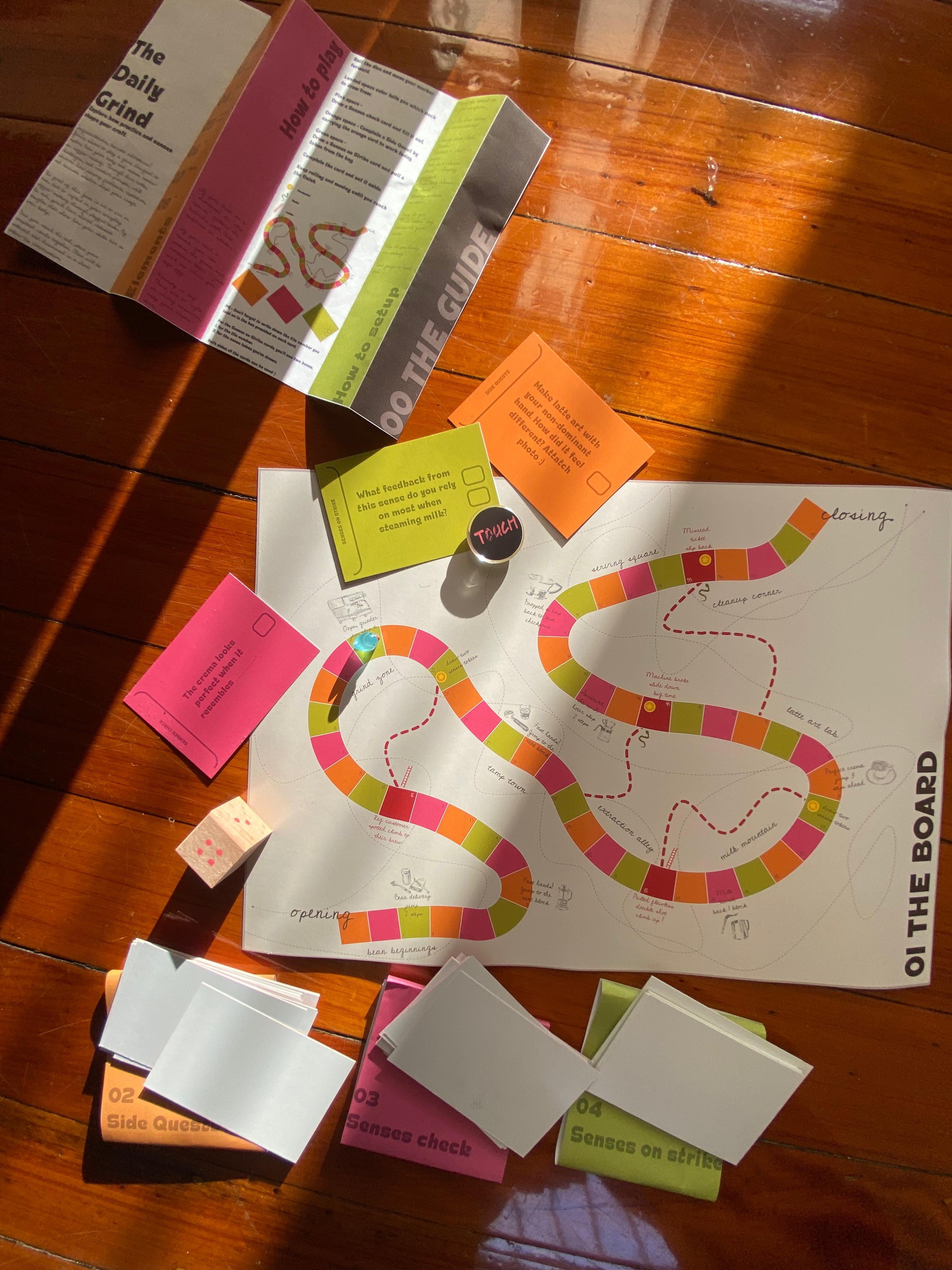
To investigate embodied remembering in barista work, I designed a Snakes-and-Ladders–inspired board game probe kit that transformed everyday coffee-making routines into a playful, reflective, and defamiliarising research activity.
Rather than treating the barista as a subject, the game positioned him as an active participant, prompting sensory awareness, reflection, and metacognition through structured randomness.
“The fastest I’ve ever made coffee was when ______.”
· Senses Check card promptThree decks, three modes of inquiry
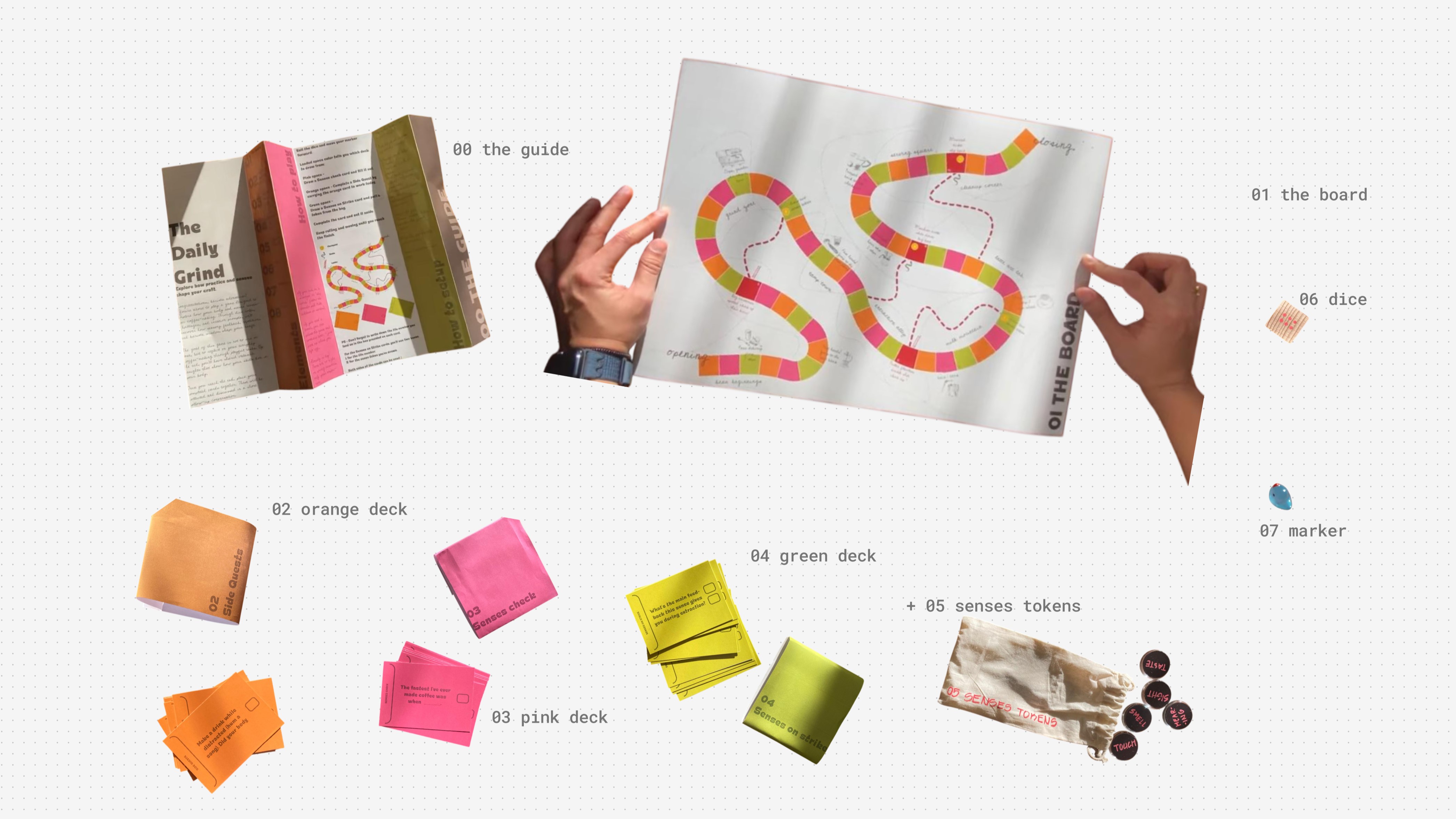
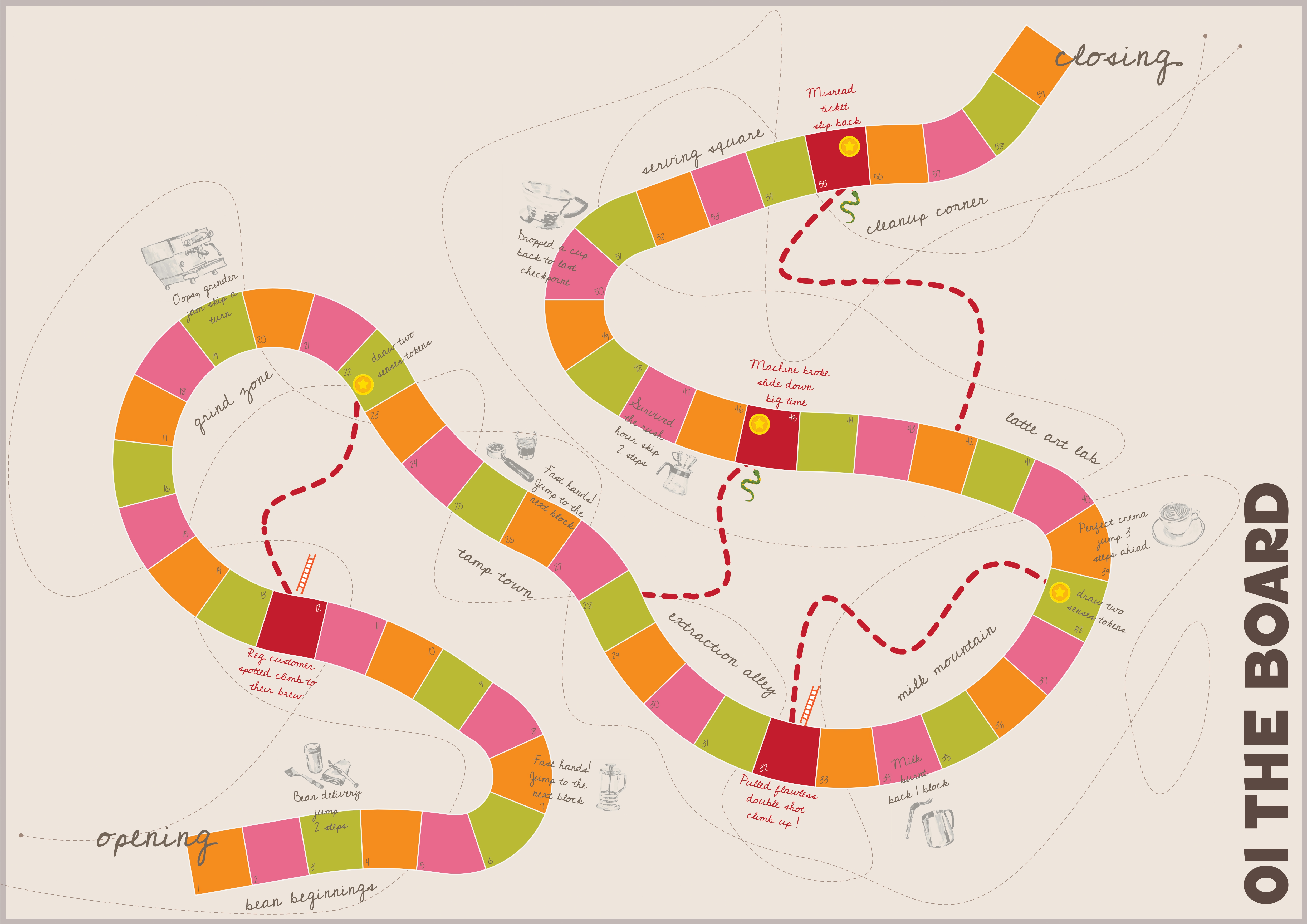
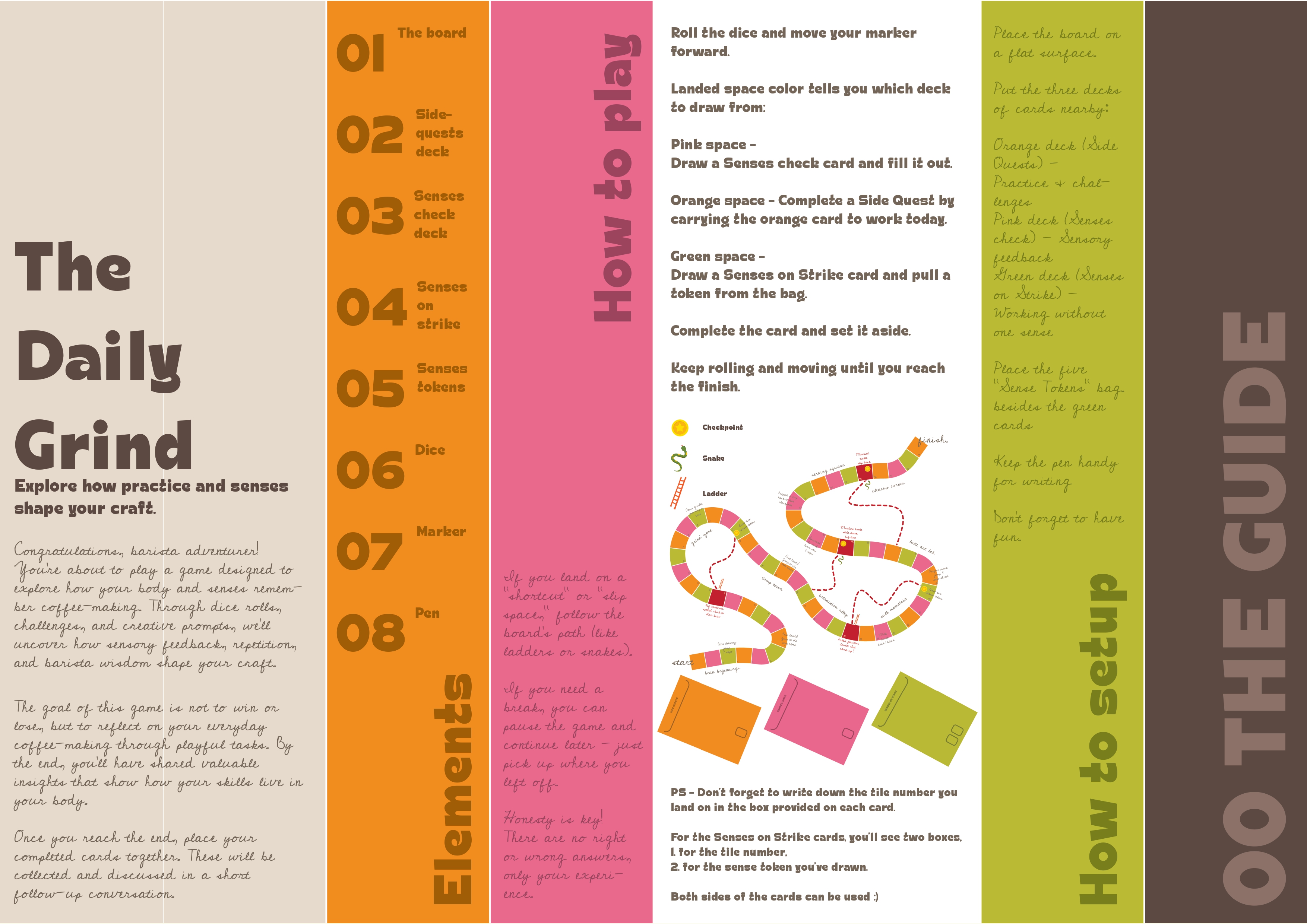
A linear board path represented a full barista shift, from opening tasks to closing routines. Colour-coded spaces each corresponded to a specific deck, with dice and a game marker randomising the order of experiences. Five sensory tokens (sight, sound, touch, taste, smell) paired with the green deck. Hover the cards to interact.
Pull an espresso without timing it. Was your body able to judge?
My hands know tamp pressure is right when ______.
Which backup cue would you use for latte art without sight?
More than data collection
The kit acted simultaneously as a reflective tool, a defamiliarisation device, and a metacognitive trigger, surfacing insights the participant had never verbalised despite 20+ years of experience.
Rich qualitative output
Two weeks of embedded probe use produced a dense body of qualitative data, written on the cards themselves, in the participant’s own words, during and after real shifts.

Play as a research method
The game format did something traditional probes rarely achieve: it lowered the stakes of participation. Baristas engaged with it as a game first, a research tool second. That ordering mattered.
The defamiliarisation tasks were the most generative. Asking someone to imagine losing a sense, or to complete a task wrong, forced them into metacognition, exactly the territory that embodied memory usually hides from.
“Playful probes can surface embodied knowledge, not just document behaviour.”
· Project conclusion