Nobody designed the conversation. The box just made the first sentence easier to say.
Proximity exists. Connection does not.
Waiting rooms, university common rooms, park benches. People sit near each other in silence all the time. The barrier is rarely unwillingness. It is just that nobody wants to go first.
Vinyl records, disposable cameras, printed receipts. There is something happening with physical things right now. Comma borrows from that instinct. William Whyte called it triangulation in The Social Life of Small Urban Spaces, an external object that gives strangers a shared reason to talk. Comma tries to be that object.
"The box goes first. The social risk transfers from the people to the object. Neither person is on the line. The silence is already broken before either of them has decided anything."
Five stages. One encounter.
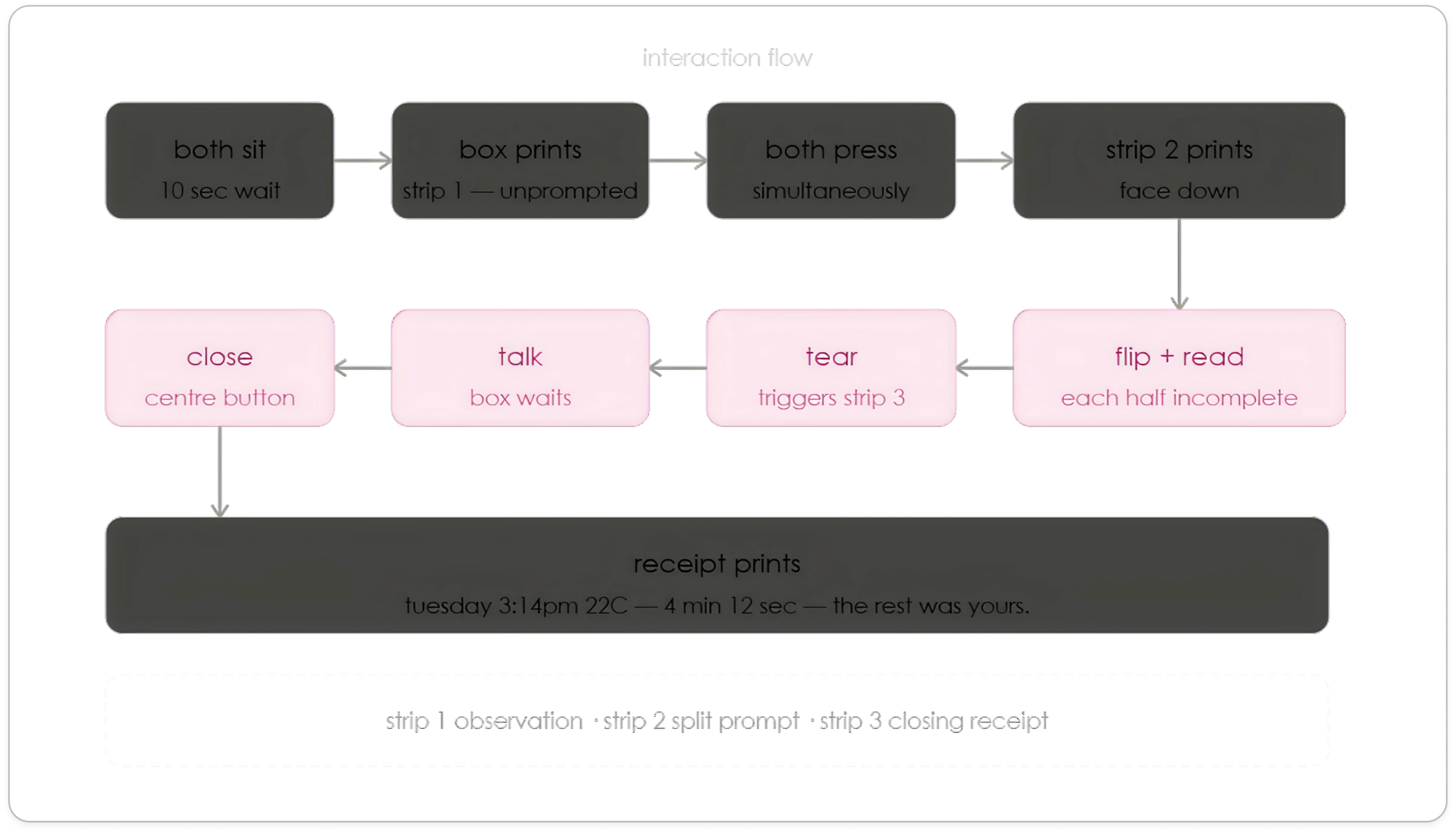
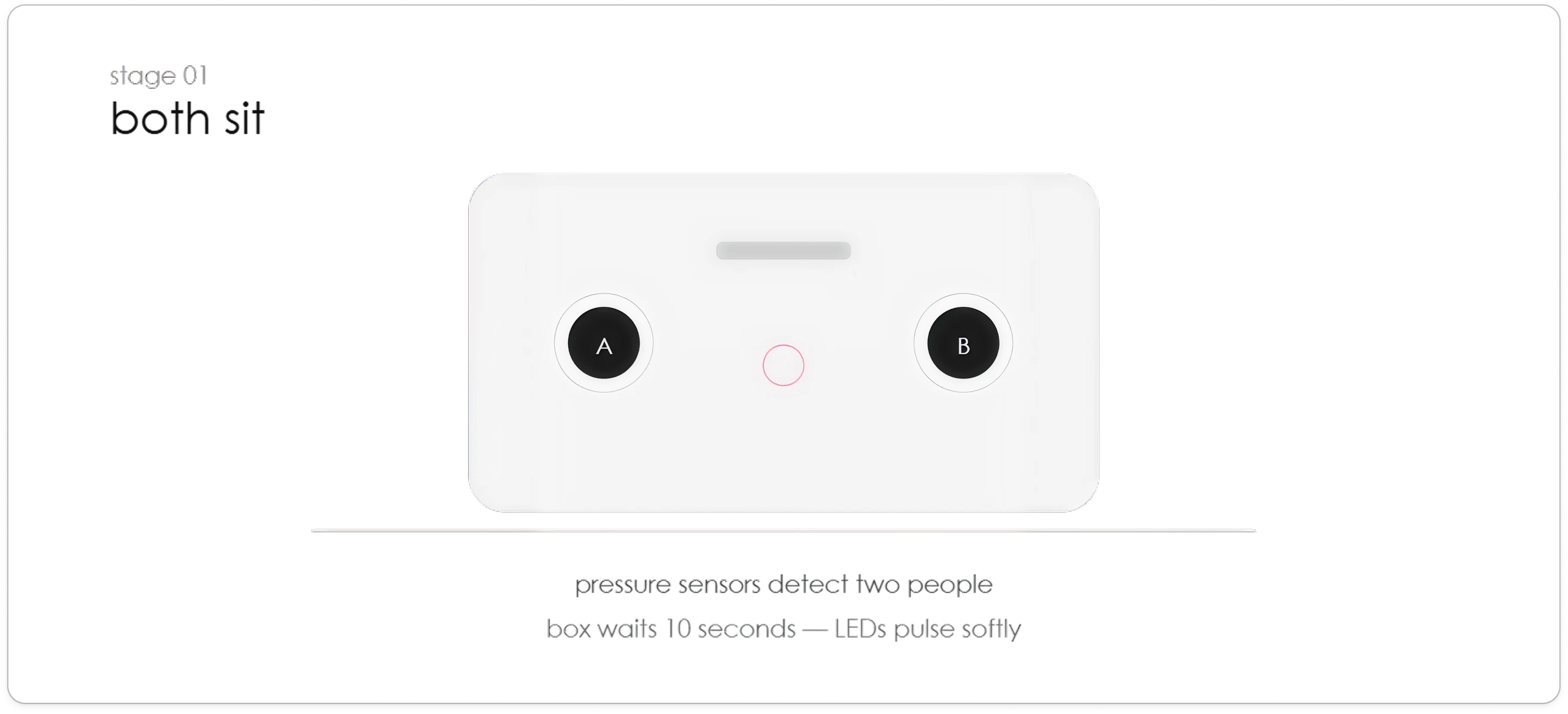
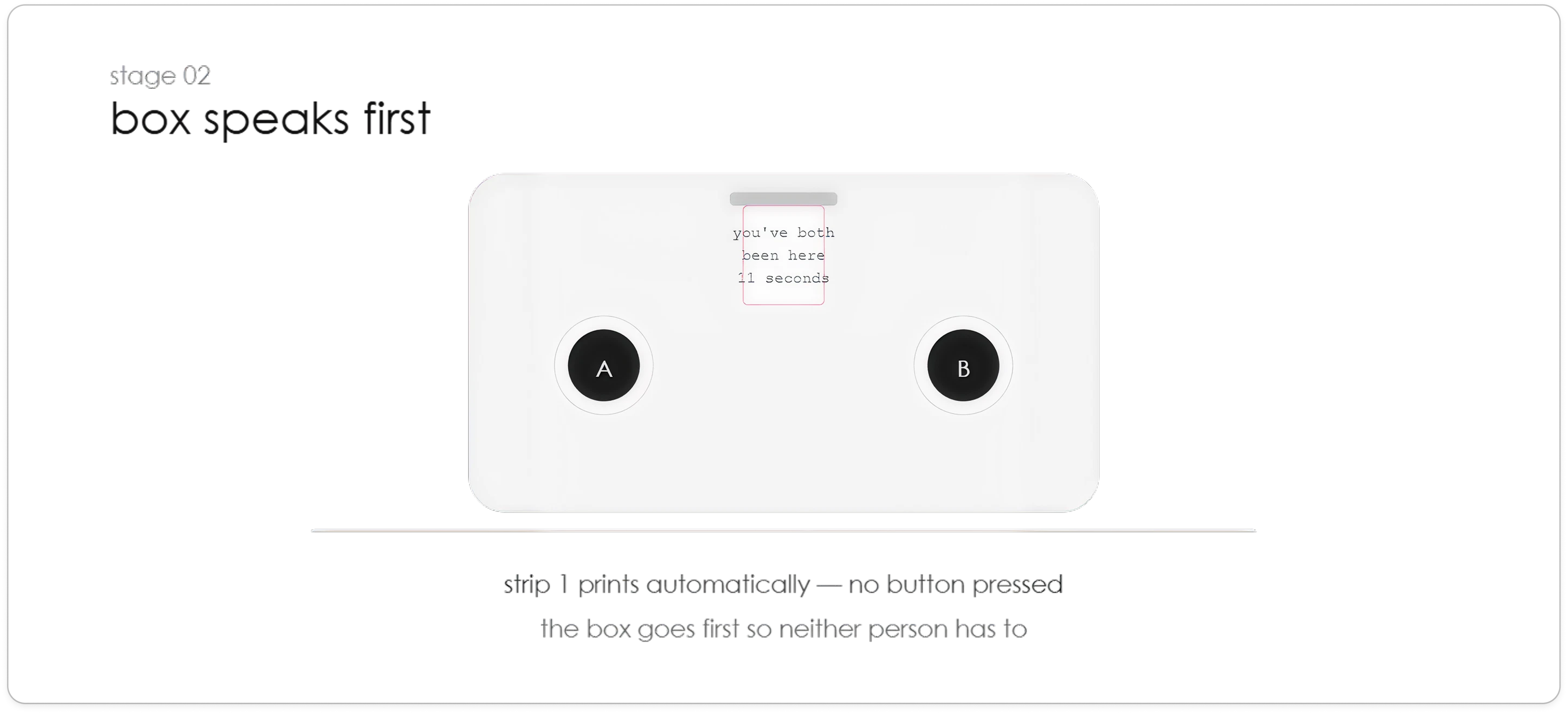
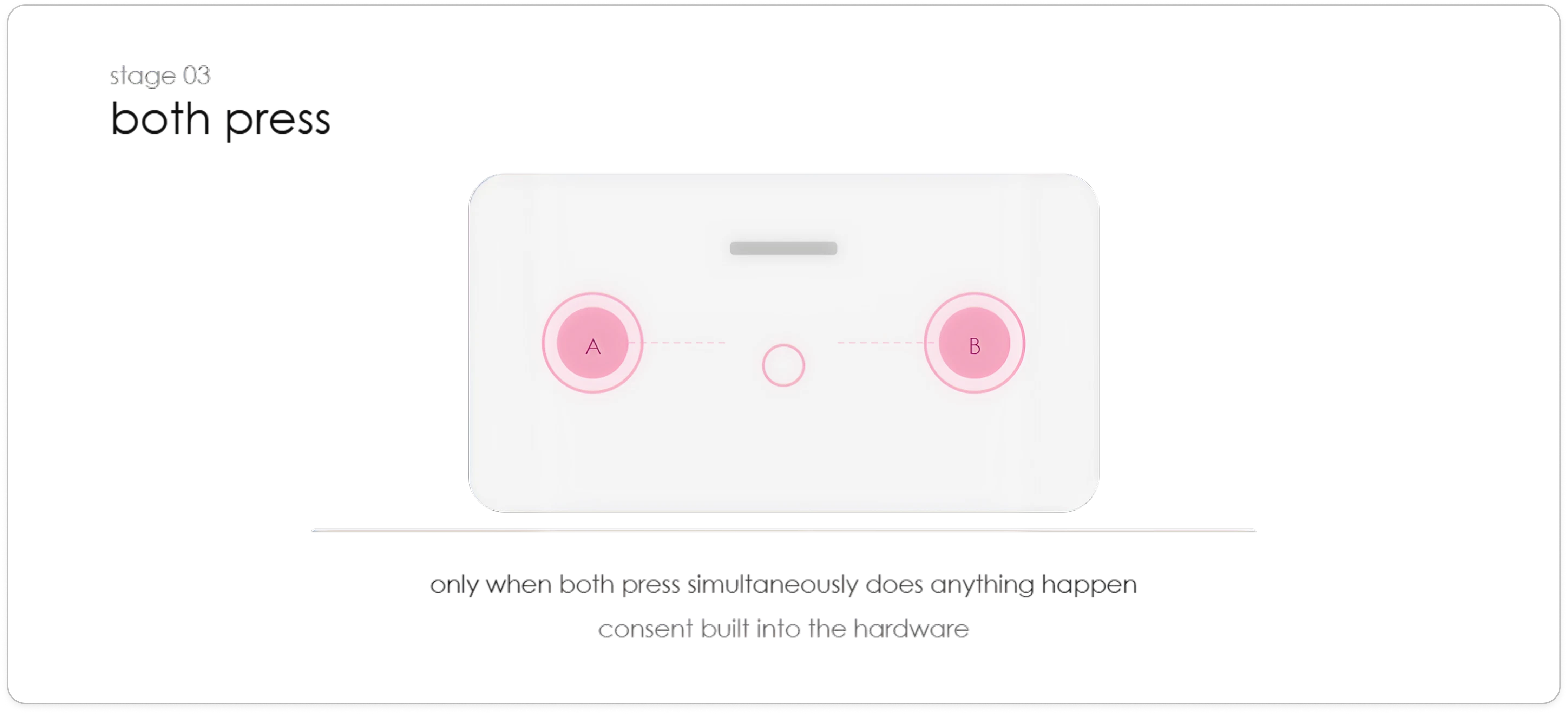
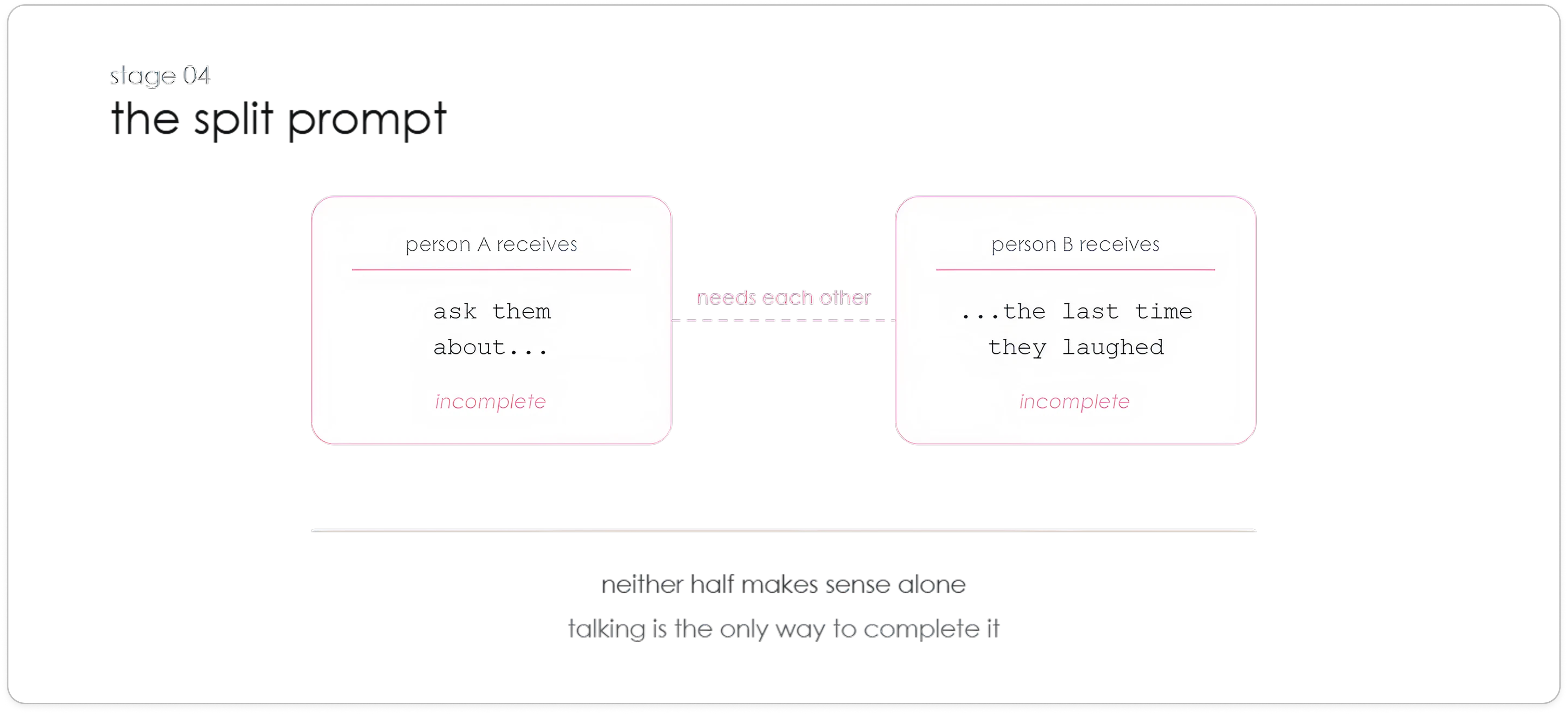
Ten seconds after two people sit, the box starts printing. Two buttons light up, one per person. Both press at the same time. A prompt prints face down. Each person gets half an incomplete sentence. Neither half makes sense alone. The only way to resolve it is to turn to the person next to you.
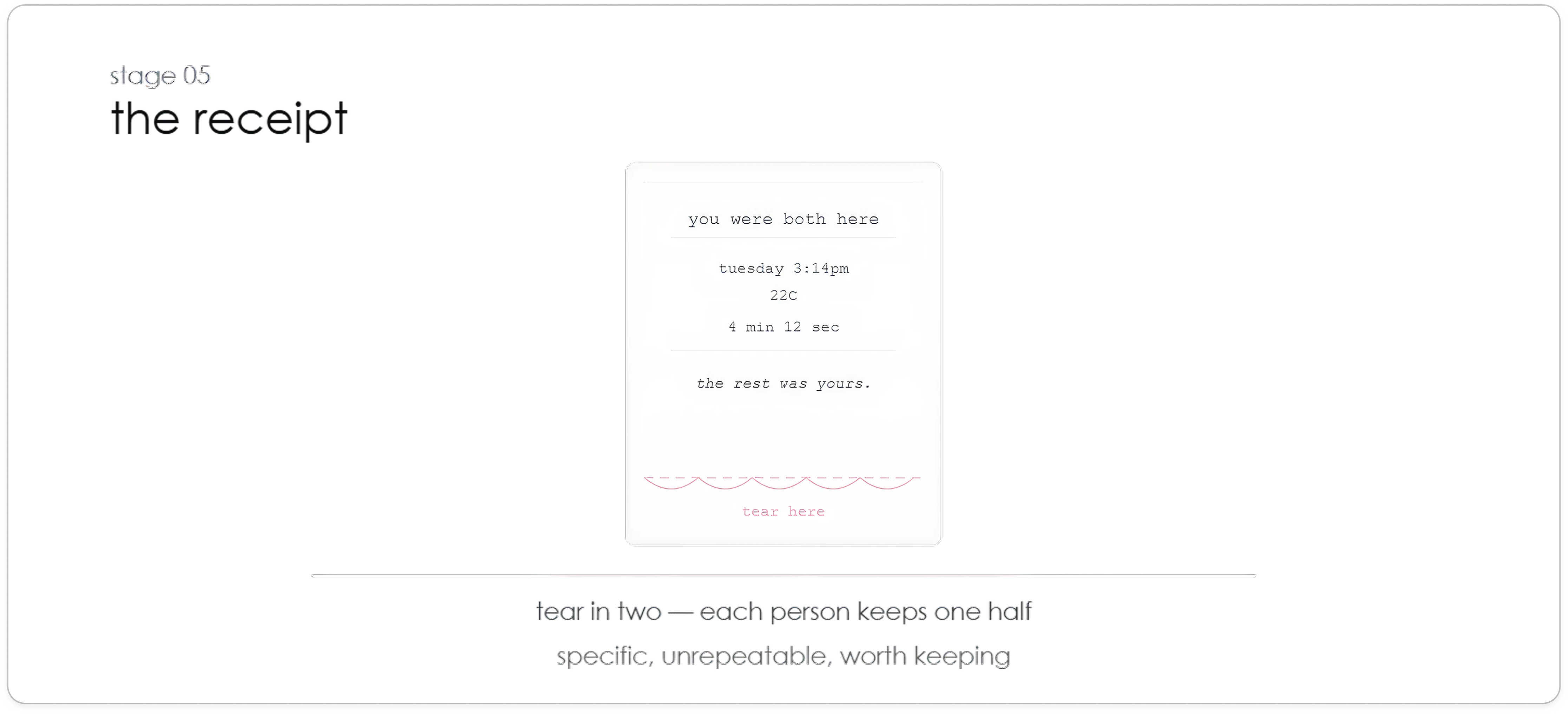
When the conversation winds down, a final receipt prints: the time, the temperature, how long they sat together. They tear it in two and keep half each.
Borrowed from urban design theory
Whyte's triangulation was about cities. Comma asks what happens when you shrink that idea down to a table. The split prompt is the key mechanic. Each person holds something incomplete, and the only resolution is turning to the person next to them.
"What if interaction design and urban design worked at the same scale? Not a city, not a screen. Just a table."
Raspberry Pi 4, FSR pressure sensors, thermal receipt printer, NeoPixel LED strip, IR break beam sensor, Python state machine. No screens, no cameras, no app required.